Experimental study of damping enhancement in aluminium rods by knurling
Abstract
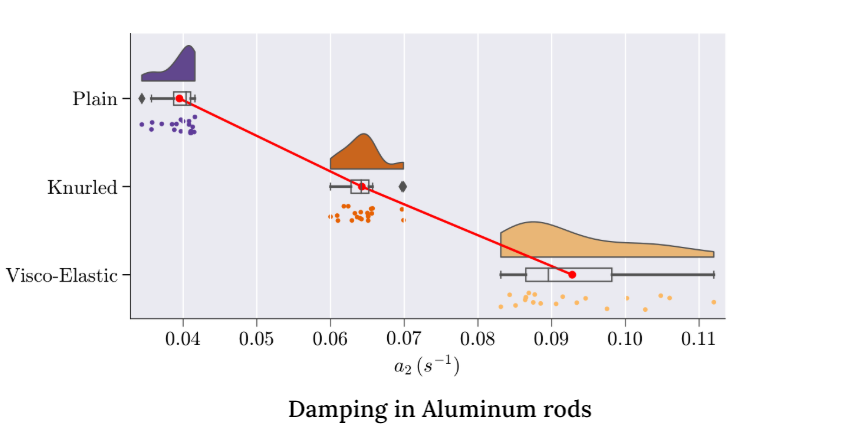
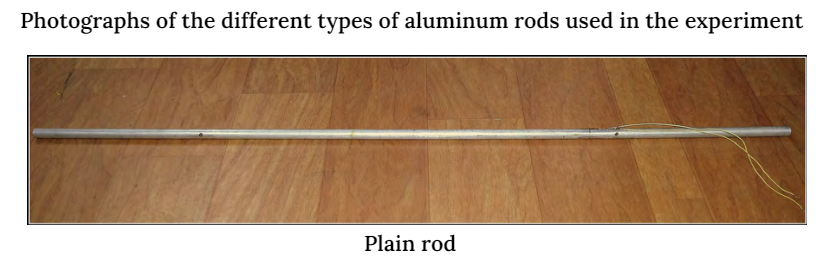
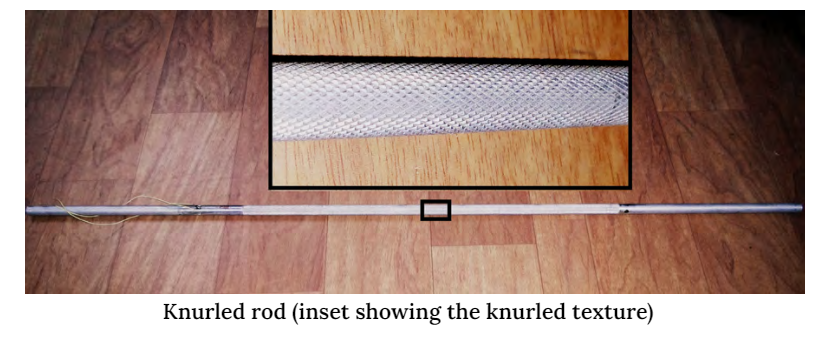
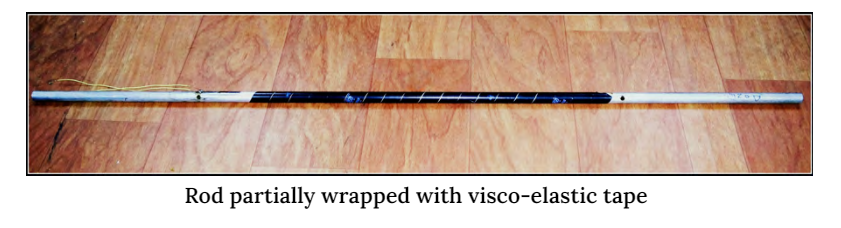
This paper is motivated by an interest in the damping behaviour of lightly damped metal components. Some anecdotal evidence suggests that near surface plastic deformation, such as in shot peening, might increase the damping of metallic components. Here we have studied the damping behaviour of slender aluminum rods in the first free-free mode, suspended at a nodal point. Three types of rods were studied: a plain rod, a knurled rod, and a plain rod wrapped with viscoelastic tape. Two rods of each type were tested. Free vibration responses of the struck rods were measured and recorded after analog and digital filtering. Damping coefficients were determined from ten measurements per rod. Results were consistent within each rod pair but significantly differed across rod types. Knurled rods exhibited approximately 1.6 times the damping of plain rods, while viscoelastic tape increased damping by a factor of 2.3. The possible role of surface roughness-induced air damping for knurled rods was investigated analytically as well as numerically (using FLUENT). It was concluded that air damping effects were weak; and that knurling, which is a near-surface deformation process, can significantly increase the damping in metal components. Although the increase is lower than it is with viscoelastic damping layers, near-surface deformation induced damping may be preferred in some applications.